GUIDEPOSTS
From Nest Tracks to Hatchlings: A Summer at Cape Romain During Sea Turtle Nesting Season
Lalya Petz, 2026 Coastal Expeditions Foundation Wildlife Conservation Intern
Cape Romain National Wildlife Refuge is the most productive nesting site for loggerhead sea turtles anywhere on the U.S. east coast north of Cape Canaveral, Florida. Each summer the Coastal Expeditions Foundation funds the small team that protects the thousands of nests laid across its barrier islands. Lalya Petz spent the 2026 sea turtle nesting season on that team. Here is her summer, in her own words.
A Season on the Beach, in Lalya’s Words
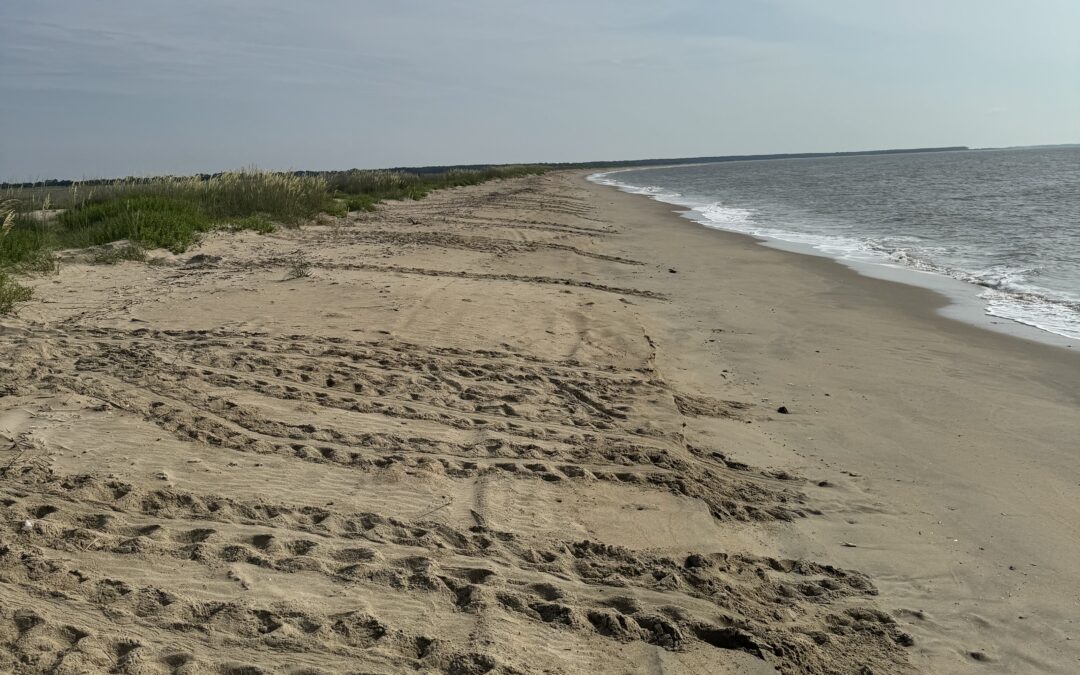
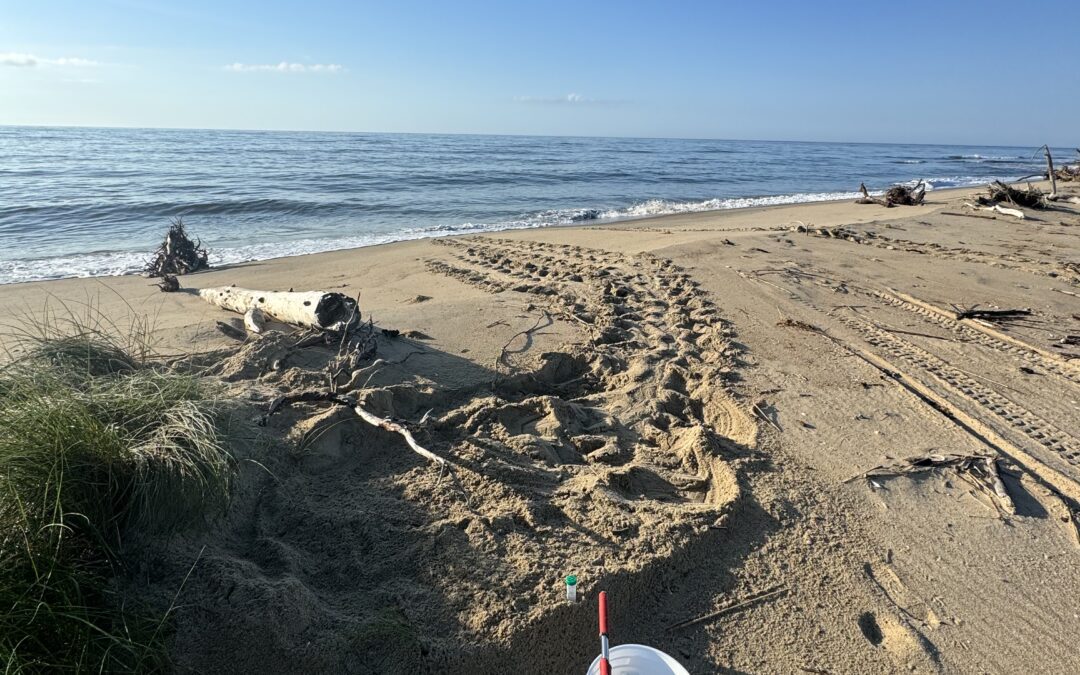
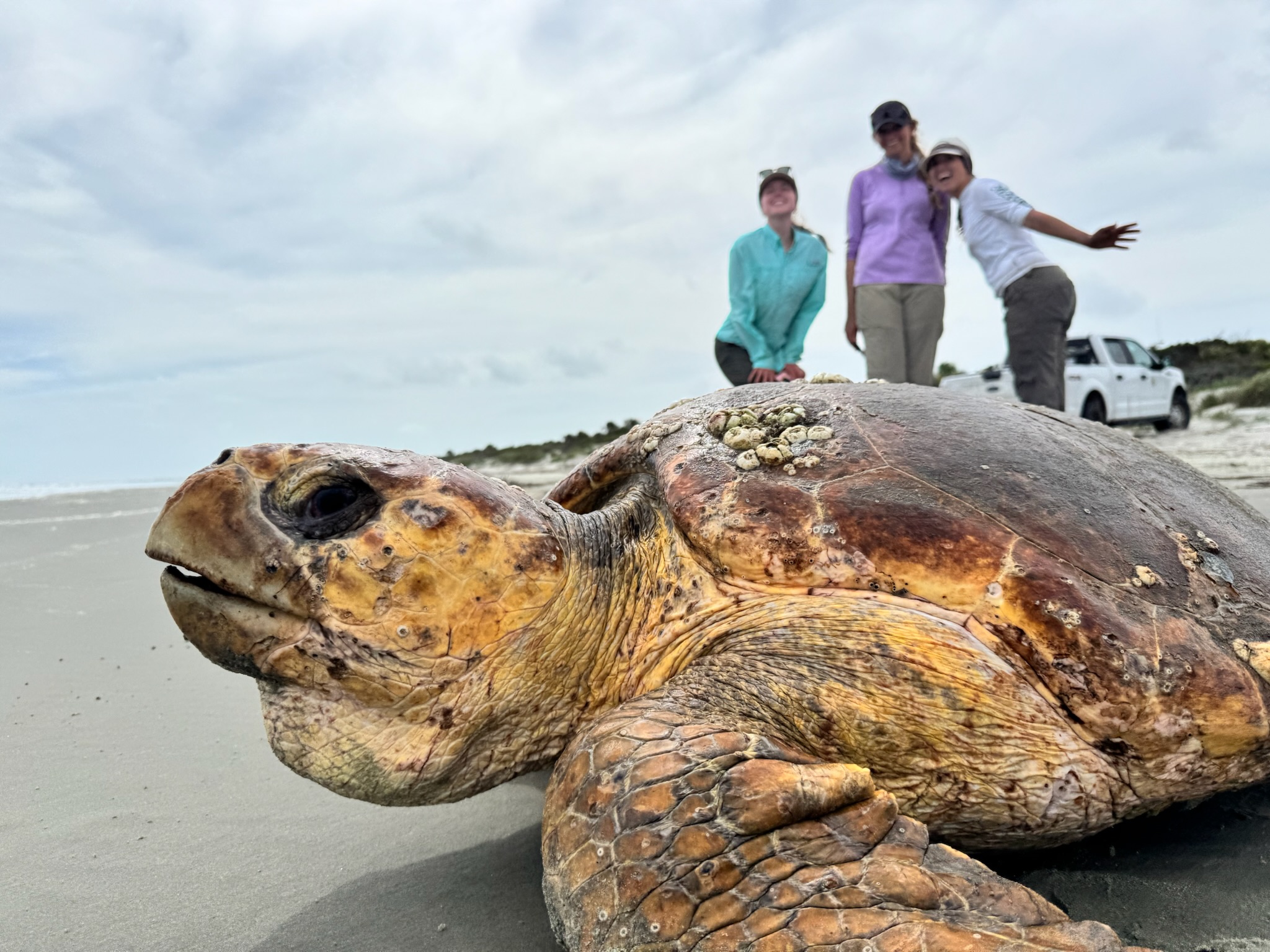
This summer, I had the incredible opportunity to participate in an internship focused on loggerhead sea turtle nesting at Cape Romain National Wildlife Refuge through the Coastal Expeditions Foundation. Every day brought new chances to contribute to conservation efforts: from locating freshly laid nests by reading the tracks left in the sand to collecting scientific data, assessing nests for relocation, tagging and marking nest sites, and monitoring nests throughout the season.
The internship was, without a doubt, the most impactful experience of my life. I’ve always said that I want to make a difference, and this summer I was able to do exactly that by directly assisting in the conservation of loggerhead sea turtles. Being a part of a team dedicated to protecting these incredible animals reinforced why I am pursuing a career path in wildlife conservation.
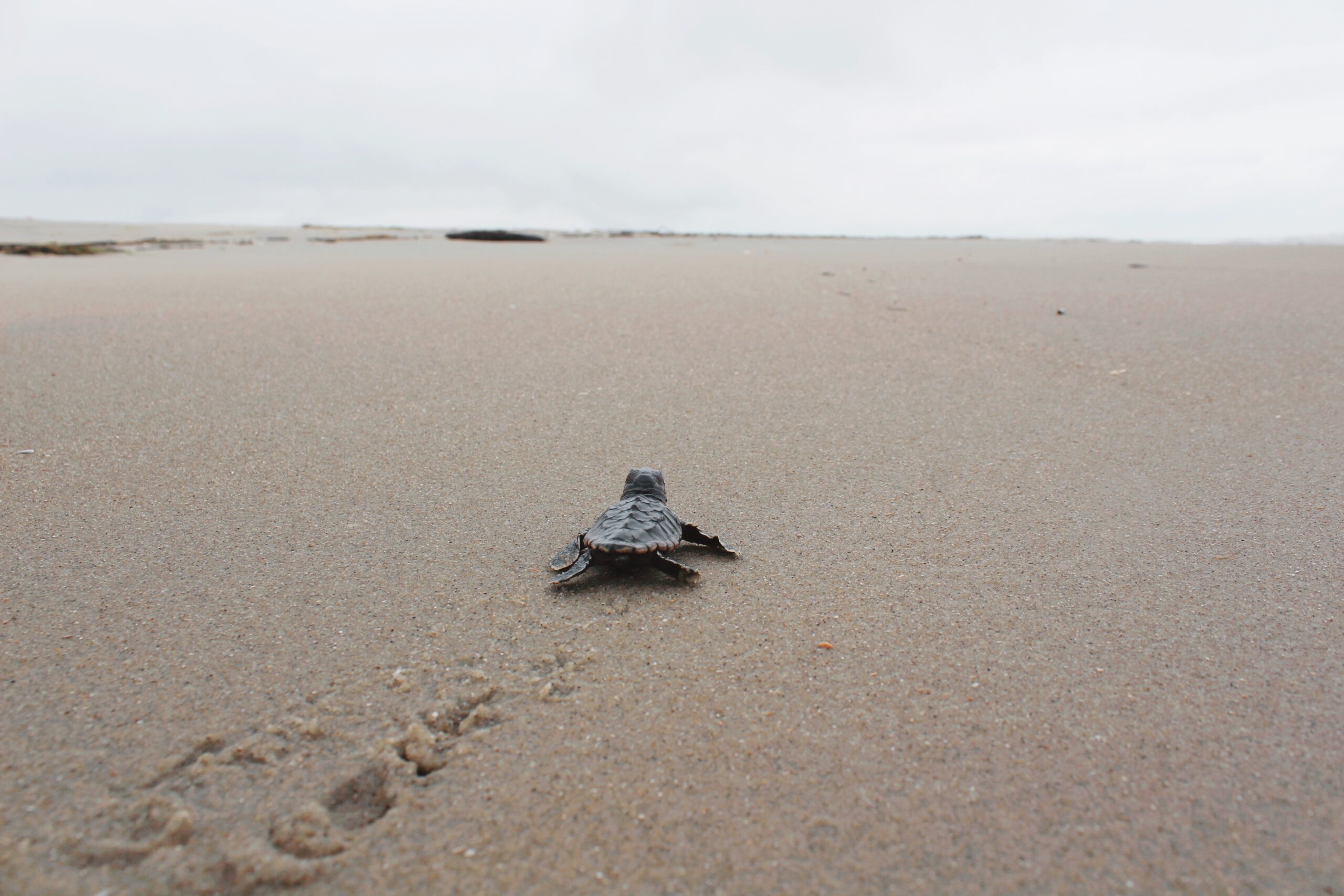
The highlight of my internship was witnessing a daytime hatchling emergence and observing hatchlings crawl into the ocean, which was an unforgettable full-circle moment. After spending weeks monitoring and tagging nests, seeing them begin their lives reminded me why conservation work matters. It was a powerful encounter that strengthened my passion and left me incredibly grateful.
Beyond the fieldwork, I gained practical experience in scientific data collection and conservation protocols. Every nest was documented with coordinates, nesting dates, long-term observations, hatch dates and post-hatch inventories. Learning these field techniques gave me a greater appreciation for the research and monitoring that guide effective wildlife management.
Although the work was physically demanding, every challenge was outweighed by the opportunity to contribute to sea turtle conservation efforts. I leave this experience with lasting memories, new knowledge and hope for the future of loggerhead sea turtle populations. Most importantly, I leave inspired to continue pursuing a career where I can make a meaningful difference for wildlife.
How the Coastal Expeditions Foundation Protects Sea Turtles at Cape Romain
Cape Romain National Wildlife Refuge covers roughly 66,000 acres of barrier islands, salt marsh and undeveloped beach north of Charleston. It is the single most productive loggerhead nesting site north of Cape Canaveral, Florida. In 2024, more than 2,000 loggerhead nests were laid inside the refuge, close to half of South Carolina’s total for the year.
Protecting that many nests takes a crew on the beach every day of the season. For decades the U.S. Fish & Wildlife Service funded the work, but a budget shortfall over the past ten years left a gap. The Coastal Expeditions Foundation, the nonprofit arm of Coastal Expeditions, now raises more than $40,000 a year through individual donations, symbolic nest adoptions, fundraising expeditions and grants. That money pays the seasonal salaries of the two wildlife technicians and three paid interns who run the sea turtle program under USFWS direction, with Boeing South Carolina as lead sponsor. Since 2018 the Foundation has funded 26 technicians and interns and helped protect more than 18,000 loggerhead nests in the refuge.
The team’s biggest single intervention is relocation. Nearly every nest laid in Cape Romain is moved above the king tide line so it isn’t washed over by high tides or storm surge. On a low, shifting barrier beach, a nest left where the female laid it often will not survive to hatch, and rising seas and bigger storms have made that more true every year.
Turtles in South Carolina face other pressures too. Artificial lighting can disorient nesting females and send hatchlings inland instead of toward the surf. Ghost crabs, raccoons and coyotes take eggs and hatchlings. On developed beaches, foot traffic, chairs and holes left in the sand all take a toll. Cape Romain’s islands are undeveloped and reachable only by boat, which removes several of those threats and makes the refuge unusually valuable habitat.
Every nest is then documented and checked for the rest of the season: coordinates, lay date, long-term observations, hatch date and a post-hatch inventory. That record is what turns a summer of fieldwork into data biologists can actually use. All work with loggerheads in the refuge is carried out under state and federal permits (MTP-563).
A $35 symbolic nest adoption covers a clutch of roughly 120 loggerhead eggs and goes directly toward keeping the team on the beach. Adopt a nest at Cape Romain.
Sea Turtle Nesting Season in South Carolina: How the Timeline Works
Sea turtle nesting season in South Carolina runs from May 1 through October 31. The nesting half and the hatching half overlap in midsummer, which is what makes June and July so relentless for the turtle team: they are finding fresh nests at dawn while checking older ones for signs of emergence.
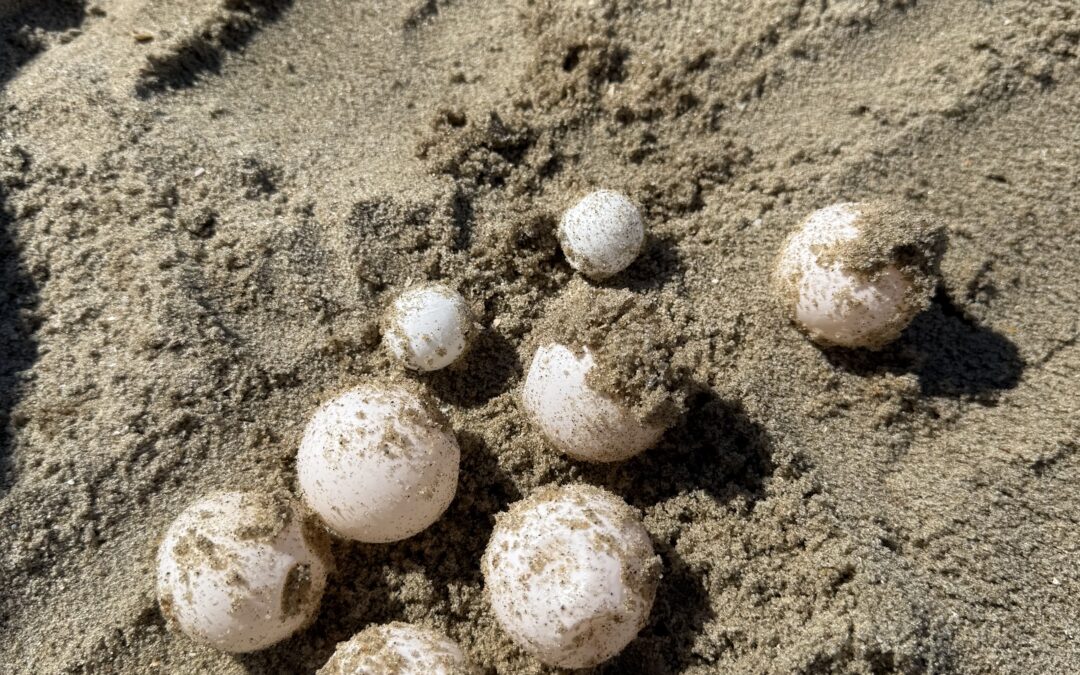
Nesting. Female loggerheads come ashore at night from May through mid-August, crawl above the high tide line and dig a nest cavity in the dry sand, laying around 120 eggs. Not every crawl ends in a nest. When a female comes up the beach, looks the site over and returns to the water without laying, the team records it as a false crawl. Those tracks still tell biologists something about where and how turtles are trying to nest, so they are counted too.
Hatching. Loggerhead eggs incubate for about 55 to 60 days. Nests in South Carolina hatch from July through October, peaking in July and August. Hatchlings almost always emerge at night, in the coolest and darkest hours, using the natural light reflected off the water to find their way to the surf. That is part of what made the daytime emergence Lalya describes above such an unusual thing to witness.
MORE TO EXPLORE
When is sea turtle nesting season in SC?
Loggerhead nesting season in South Carolina runs from roughly May through October, with females coming ashore to lay nests from May to mid-August. The height of nesting activity typically falls in June and July.
When do sea turtles hatch in South Carolina?
After an incubation period of about 55 to 60 days, sea turtle eggs in South Carolina typically hatch between July and October, with hatchling emergences peaking in July and August.
Where do loggerhead turtles lay their eggs?
Loggerhead turtles come ashore at night to lay their eggs on undisturbed, sandy beaches above the high tide line, including the barrier island beaches within Cape Romain National Wildlife Refuge, one of South Carolina’s most important nesting sites.
What is the Coastal Expeditions Foundation Wildlife Conservation Internship?
The Wildlife Conservation Internship is a hands-on summer internship based within Cape Romain National Wildlife Refuge. College interns work alongside U.S. Fish & Wildlife Service wildlife experts and Coastal Expeditions guides, gaining field experience in loggerhead sea turtle nest protection, shorebird and seabird stewardship, environmental education and naturalist work.
Is housing provided for the Coastal Expeditions Foundation Wildlife Conservation Internship?
Yes, housing at Garris Landing in Cape Romain National Wildlife Refuge is offered to interns along with a stipend for living expenses. This opportunity is made possible by private donations to the Sea Turtle Program and a generous grant from Boeing.
How do I apply for the Wildlife Conservation Internship at Cape Romain?
Applicants submit a cover letter, resume or CV, and professional references or a recommendation letter. The internship is designed for recent graduates or college juniors and seniors studying biology, marine science, conservation, wildlife management or a related field. When applications are open, we’ll share current requirements, dates and application instructions through the Coastal Expeditions Foundation. Sign up to get a notification here.