GUIDEPOSTS
How a Short Film Is Helping Windbirds and Other Birds in Charleston, SC, Keep Their Islands
On the night of a blood moon, Capt. Chris Crolley stands on a sandbar off the South Carolina coast as the tide comes in. A few silhouettes drop out of the dark, then whole flocks, until he can hear birds all around him. “It feels like you’re small,” he says. “You’re just a very tiny part of this very large phenomenon.”
That scene opens Wind Birds, a new short film about the islands that shorebirds and seabirds can’t live without, and why it may be time for people to start building them back. It premiered on October 15 and follows Chris, whose company, Coastal Expeditions, has been “introducing Earthlings to Earth” since 1992. Garden & Gun, which named Chris one of its Champions of Conservation in 2022, featured the film as well.
If you have ever wondered about the birds that live along our coast, and what it takes to keep them here, the film is a good place to start. Here is what it covers, and how you can see these birds for yourself.
What Are Windbirds, and Why Do They Stop in South Carolina?
“Windbirds” is an old, lovely name for migratory shorebirds: the plovers, sandpipers, curlews, and their kin that spend their lives chasing the seasons up and down the coastlines of the world. Peter Matthiessen made the name famous with The Wind Birds, a book Chris often recommends to guests heading out to see shorebirds on Bulls Island.
In the film, Chris traces their route: the length of South America, across the Caribbean, and onto the coast of South Carolina, part of what he calls “the hemispheric flow of life back and forth between the south and the north.” Our bird banks are a refueling stop on that trip. SCDNR lists dunlin, ruddy turnstones, whimbrels, and sanderlings among the shorebirds that pass through, and in late winter and spring, red knots gather by the thousands at Cape Romain National Wildlife Refuge and on Seabrook, Kiawah, and Harbor Islands.
The horseshoe crab connection
The most remarkable part of the story is what these birds eat when they get here. During the new and full moon tides of April and May, horseshoe crabs crawl onto our beaches to lay their eggs in the sand, and the windbirds land right in the middle of it. Chris calls it a jamboree of “perfect protein-packed fat”: eggs about the size of a mustard seed, billions of them in the water. A red knot can nearly double its body weight on them during a short stopover, according to the Southern Environmental Law Center.
“They get fat and they get rested,” Chris says. “And then one day they’re gone.” Most red knots that leave South Carolina fly straight to their Arctic breeding grounds without stopping again, so if the eggs or the beaches are not there, the birds start that flight running on empty. You can read more about this ancient partnership in our post on protecting horseshoe crabs in South Carolina.

The Bird Island of SC: Why the Nesting Islands Are Disappearing
The islands in the film are not postcard islands. They are low banks of sand and shell, often just a few feet above high tide, with no trees, no docks, and no people. That emptiness is exactly what makes them valuable. Pelicans, terns, black skimmers, and oystercatchers lay their eggs right on the sand, and they need a place where predators and foot traffic can’t reach them.
The film is honest about why these islands are disappearing. Water levels are rising, and people are part of the problem too. “We are in the way,” Chris says. “We crowded the birds out of their land.” At Crab Bank, the biggest culprit was the wakes of passing container ships, which slowly washed the island away. Chris has a phrase for what happens to birds caught in the middle. He calls it coastal squeeze: as the sea rises, water covers the sandbars where birds feed, rest, and nest, and they have nowhere else to go.
The change shows up in the flocks. “They used to come in the thousands,” Chris says. “They’re now coming in the hundreds.” Long-term surveys tell the same story across the continent: North American shorebird populations have dropped by an estimated 70 percent since the early 1970s, as Scientific American reported, and red knots have declined by nearly 85 percent over the last few decades.
Chris calls this “the burden of knowing.” For the first time in Earth’s history, a mass extinction is unfolding and one creature on the planet is aware of it. That creature is us, which means we are also the ones who can do something about it.
Is there a bird island in SC?
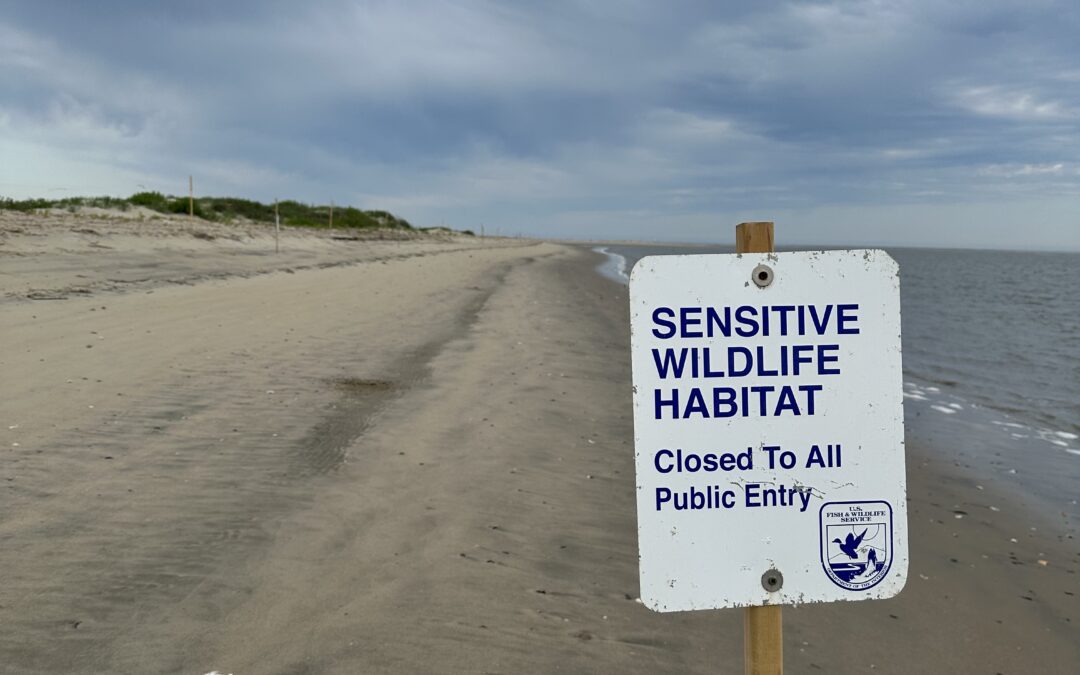
Yes, five of them. As the film explains, the bird banks off the South Carolina coast are Tomkins Island, Deveaux Bank, Bird Key-Stono, Crab Bank, and Marsh Island. Deveaux Bank near Seabrook Island was once by far the largest nesting area, but it has shrunk to around 5 to 7 acres, down from more than 200. Crab Bank, a seabird sanctuary at the mouth of Shem Creek in Charleston Harbor, eroded away and was lost as a nesting site in 2017. Today it is closed to visitors from March 15 to October 15 so the birds can nest in peace.
How Small Groups Are Helping the Birds of the Lowcountry
For all its hard truths, Wind Birds is a hopeful film. “A few people can make a difference,” Chris says. “That’s an empowering thing to understand.” When Crab Bank was washing away, he and his neighbors did not wait for the tide to decide. In his words, “we rebuilt it.”
When the island disappeared, Chris started the Coastal Expeditions Foundation in 2018 to help bring it back, calling it the most significant work of his lifetime. The Foundation joined SCDNR, Audubon South Carolina, the Coastal Conservation League, the U.S. Army Corps of Engineers, local businesses, and thousands of neighbors in a push to rebuild the island using sand dredged from the deepening of Charleston Harbor. Crews finished the work in November 2021, leaving about 35 acres of fresh nesting ground sitting 5 to 8 feet above high tide.
How many birds nest on Crab Bank now?
The birds found it right away. In its first season back, biologists documented more than 500 nests on Crab Bank, including 237 black skimmer nests and 179 gull-billed tern nests, plus eight pairs of American oystercatchers. The island held up through a spring storm and Hurricane Ian that same year, staying dry above the tide just as it was designed to. The pelicans took longer, waiting for shrubs to root on the new sand, but in 2025 brown pelicans returned to Crab Bank to nest for the first time since 2017.
Chris is clear that the goal is not to freeze these islands in place. As long as the systems keep shifting and migrating the way they naturally do, he believes the birds will survive, and the work has to be done “with the whole system in mind.” Some places still need help. Marsh Island in Cape Romain, he says, needs to be restored “because we were the ones who destroyed it.”
The same kind of teamwork has helped the windbirds at Cape Romain. Chris served as a standing witness in the lawsuit that protected horseshoe crabs in the refuge, and today the entire refuge is off limits to horseshoe crab harvesting. That means more eggs on the beach each spring for hungry red knots. You can see more of what these partnerships have accomplished in real outcomes for South Carolina’s coastal birds.
Bird Watching in Charleston, SC, With Coastal Expeditions
The best way to understand what the film is about is to see these birds up close, from a respectful distance. Our guides train each spring with shorebird specialists from SCDNR, several are Audubon Shorebird Stewards, and every trip keeps far enough off the islands that nesting birds are never disturbed. Every tour to Crab Bank also helps fund the Coastal Expeditions Foundation’s seabird work.
A few ways to go birding in Charleston, SC, with us:
- Crab Bank Bird Colony Cruise: A two-hour, small-group boat trip from Shem Creek at sunrise or sunset, with room for no more than 16 people. It is a favorite with photographers, and the covered boat works for all ages.
- Bird Sanctuary Kayak Safari: A three-hour paddle out to Crab Bank, where you can hear pelican bills clapping and watch skimmers slice across the water.
- Baby Pelican Cruise: A summer trip for seeing downy pelican chicks in the colony.
- Least Tern Nesting Expedition: A closer look at one of the smallest seabirds that nests on our beaches.
When is the best time for bird watching in Charleston, SC?
It depends on what you want to see. April and May bring the windbirds, when red knots and other shorebirds stop to feed on horseshoe crab eggs. Late spring and summer are nesting season, the time to see pelicans, skimmers, and terns raising chicks on Crab Bank. Fall and winter are quieter on the colonies but excellent for shorebirds and ducks, especially on a trip for winter birding in Cape Romain.
What are some common birds in SC to look for on the water?
On a typical trip out of Shem Creek, you might see brown pelicans (South Carolina’s official state seabird), black skimmers, royal and least terns, American oystercatchers, and wading birds like egrets and roseate spoonbills working the marsh edges. For a deeper look at the birds of Charleston, SC, from the marsh to the backyard feeder, our guide to birding in the Lowcountry is a great place to start.
Why These Islands Are Worth Saving
Near the end of the film, Chris says something about these shifting spits of sand that stays with you. Because they come and go, they can’t be controlled or tamed, and “anything that defies taming is worthy of worship and worthy of saving.” They show nature’s power and its fragility at the same time.
His answer is just as direct: “It’s time that we become island builders.” For Chris, everything he knows about red knots and horseshoe crabs comes down to a moment of kindness, “which is where I think conservation begins.” Crab Bank shows what that looks like in practice. The birds came back because enough people decided they should.
Watch the Wind Birds film, then come see the islands for yourself. If you would like to help keep them above the tide, you can support the work of the Coastal Expeditions Foundation. We will save you a seat on the boat.