GUIDEPOSTS
Cape Romain Loggerhead Log: Update 3
*All activity conducted with loggerhead sea turtles in Cape Romain National Wildlife Refuge is done under state and federal permits (MTP-563)
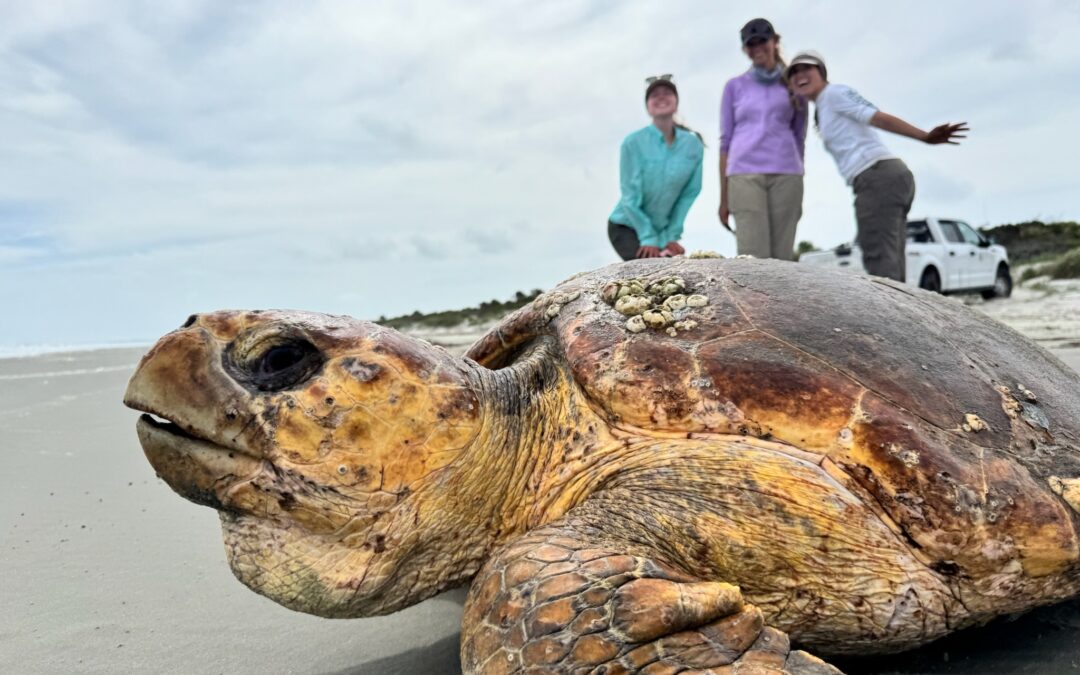
As of June 17, 2026, we have recorded 1655 nests in Cape Romain National Wildlife Refuge
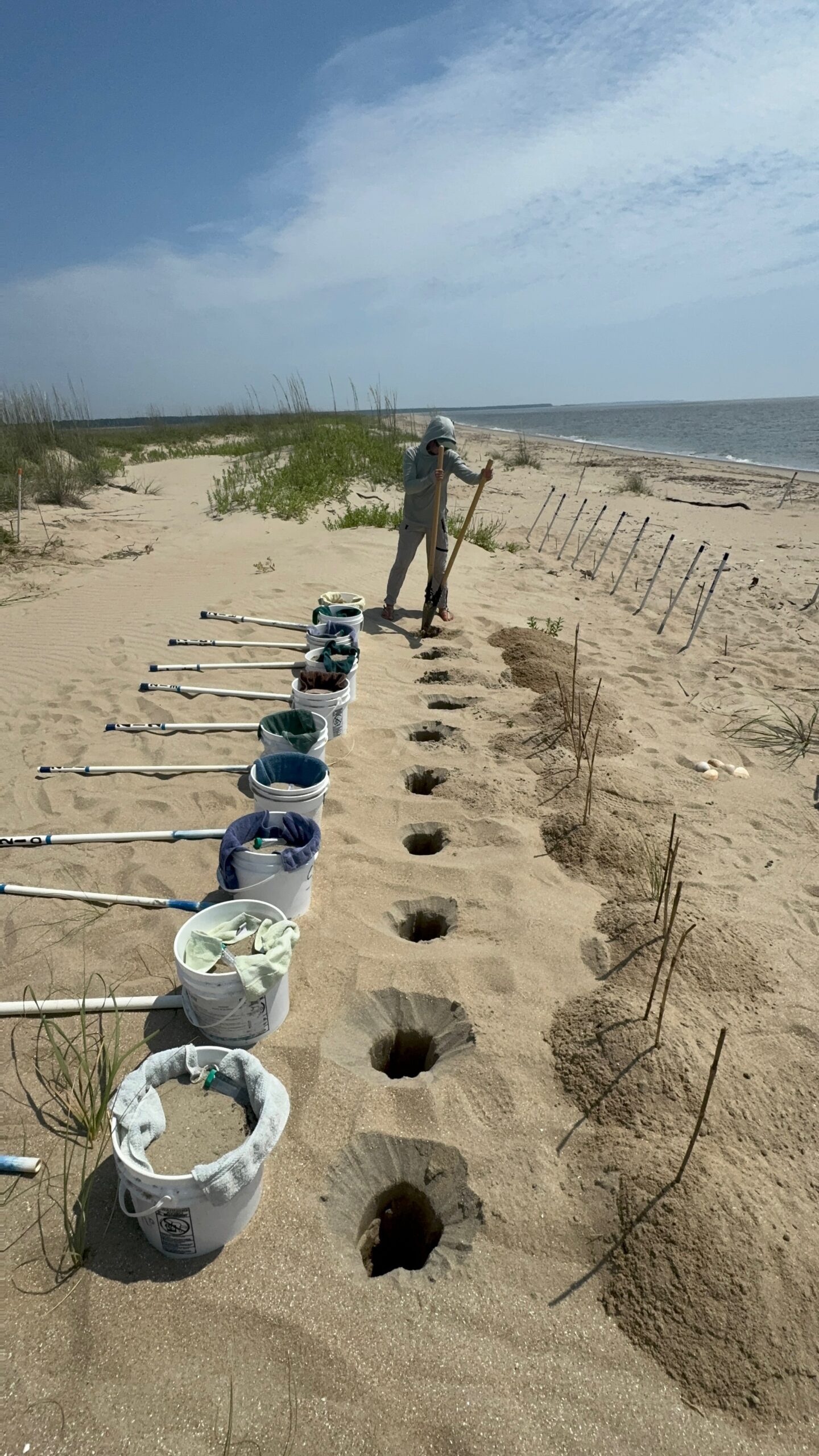
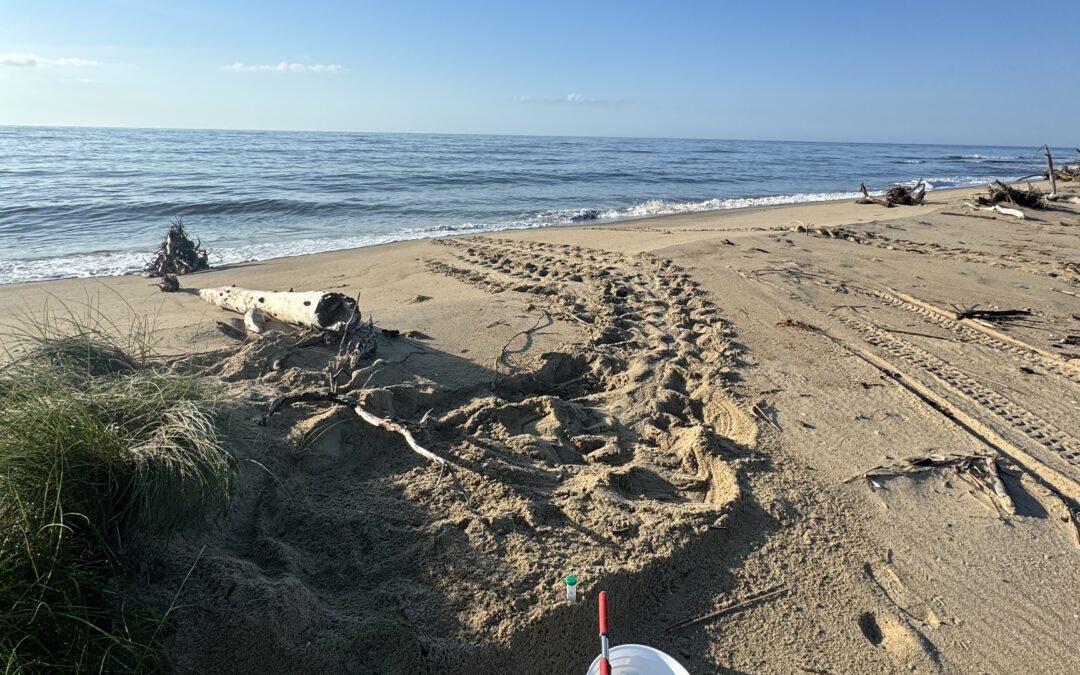
When there are many nests to relocate to higher ground, the team preps the site to be ready
Nesting Update from Abbie King
The 2026 loggerhead nesting season at Cape Romain National Wildlife Refuge continues to exceed expectations.
As of this week, the sea turtle team has documented more than 1,600 nests across the refuge’s barrier islands, putting the season slightly ahead of the pace set during the record-breaking 2019 season, which ultimately finished with approximately 3,600 nests.
The numbers are remarkable:
- 1,600+ loggerhead nests
- 1,800+ false crawls
- 70 nests in a single day (the highest daily total so far)
- 148 false crawls in a single day (the highest daily total so far)
Each morning, the team surveys the refuge’s nesting beaches, covering more than six miles of remote barrier island shoreline:
- Cape Island: 2.85 miles
- North Lighthouse Island: 2.75 miles
- South Lighthouse Island: 0.75 miles
Together, these beaches make up one of the most important loggerhead nesting sites on the Atlantic coast and the most significant nesting area north of Cape Canaveral.
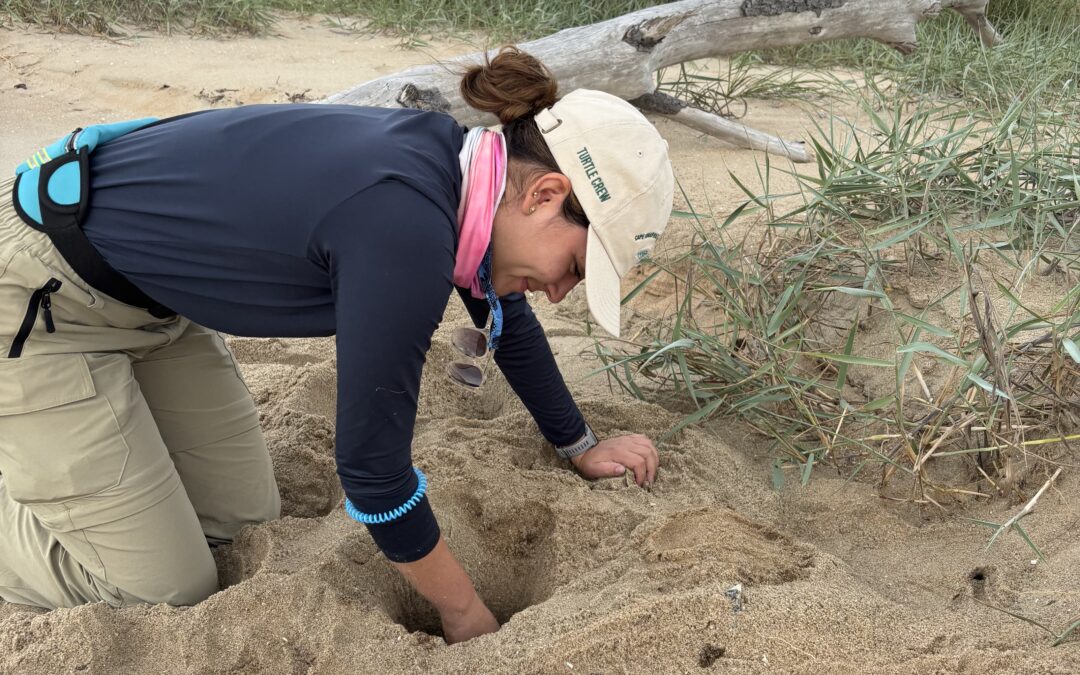
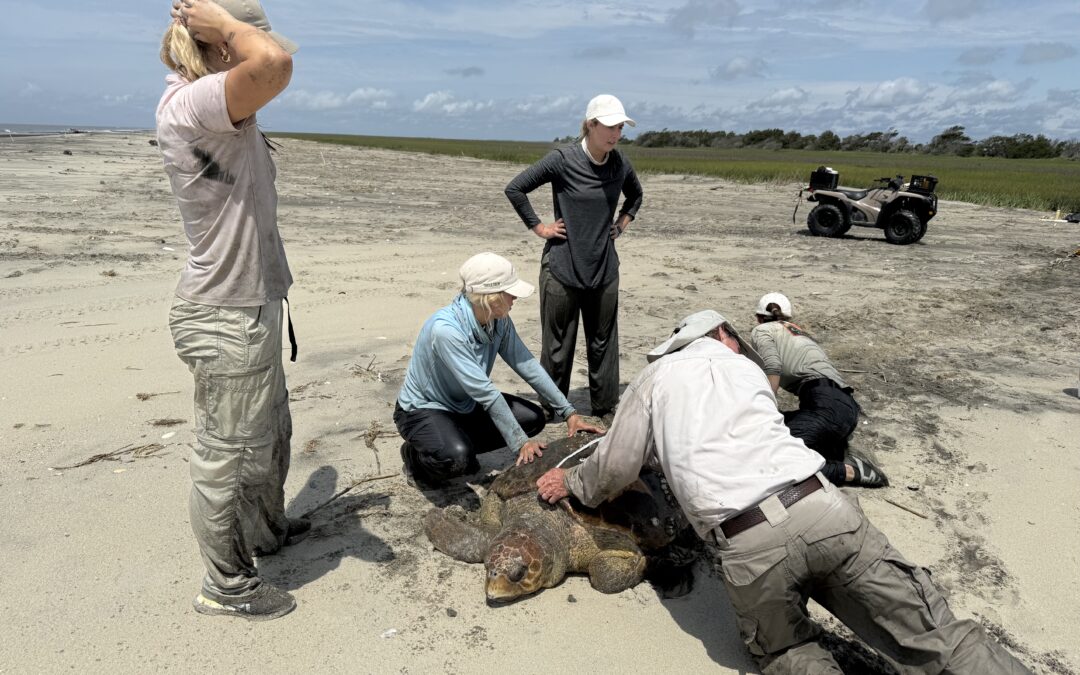
Behind every nest count is a tremendous amount of work. The sea turtle crew is currently putting in long days under challenging summer conditions to locate, document, and protect nests from tides, predators, and other threats.
This season’s team includes five outstanding interns who joined the project in May. On their very first day in the field, the crew recorded an impressive 32 nests, offering an early sign that 2026 could be a special year.
While the nesting season has already delivered exciting milestones, the next chapter is almost here.
Hatching season is just around the corner.
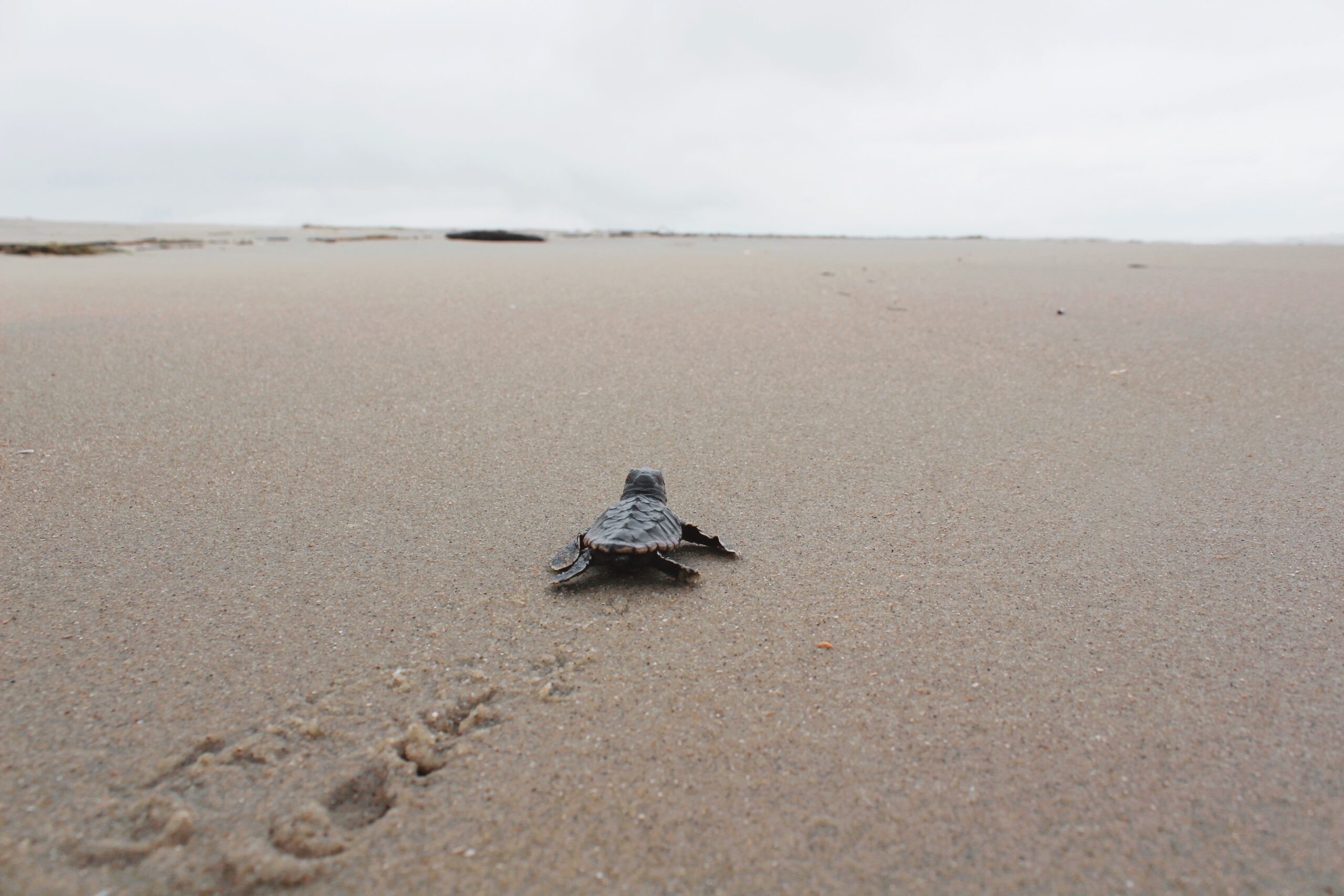
In the coming weeks, thousands of hatchlings will begin emerging from nests and making their way toward the Atlantic Ocean. For the biologists, technicians, interns, and volunteers who have spent months protecting nests, it’s the moment they’ve been working toward all season.
For now, the team will continue the daily surveys, celebrate each new nest, and keep an eye on the numbers as the season unfolds.
If the current pace continues, Cape Romain could challenge one of the most successful nesting seasons ever recorded on these beaches.
Keep your fingers crossed for the turtles—and for the dedicated team helping them reach the sea.
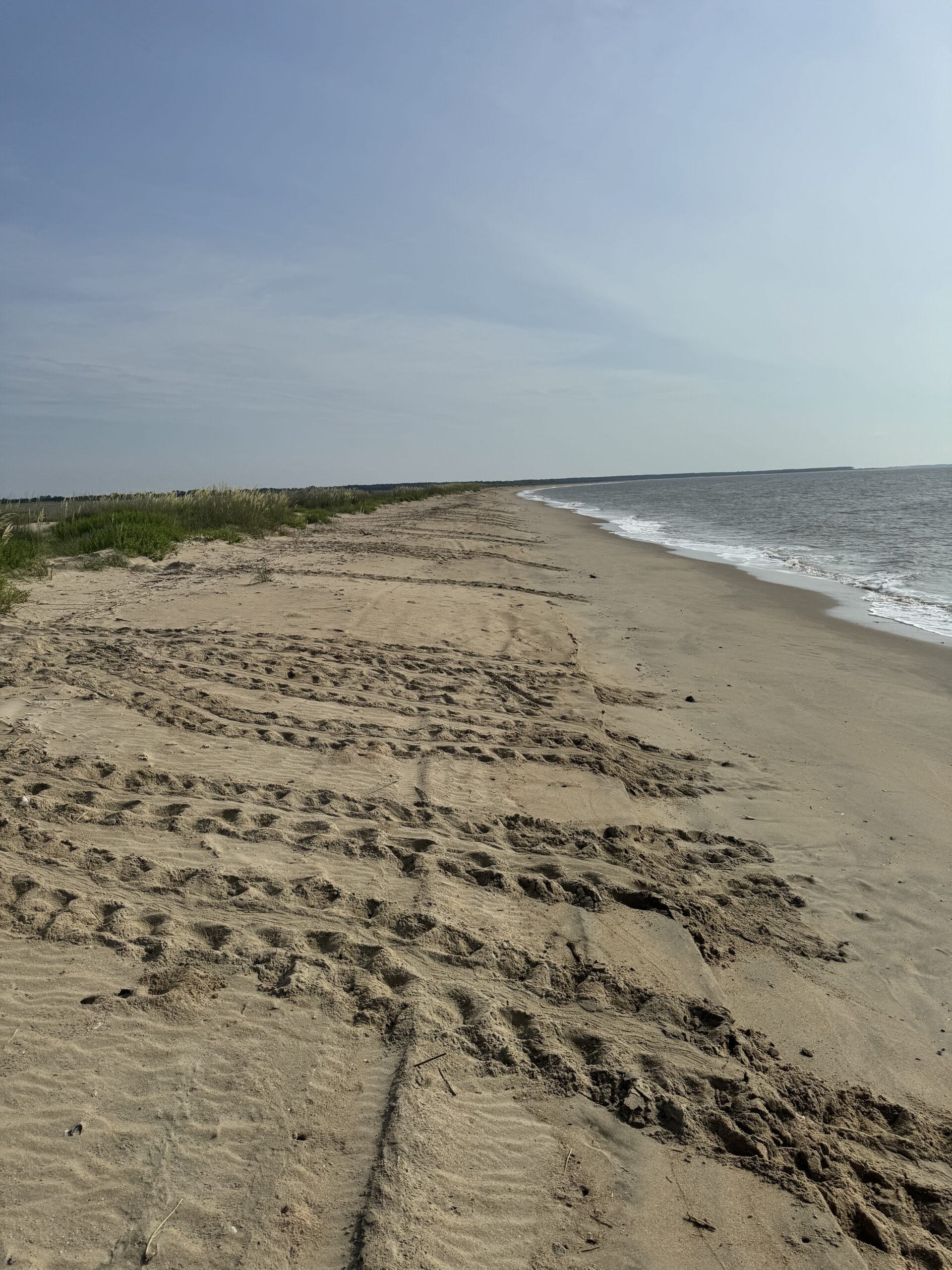
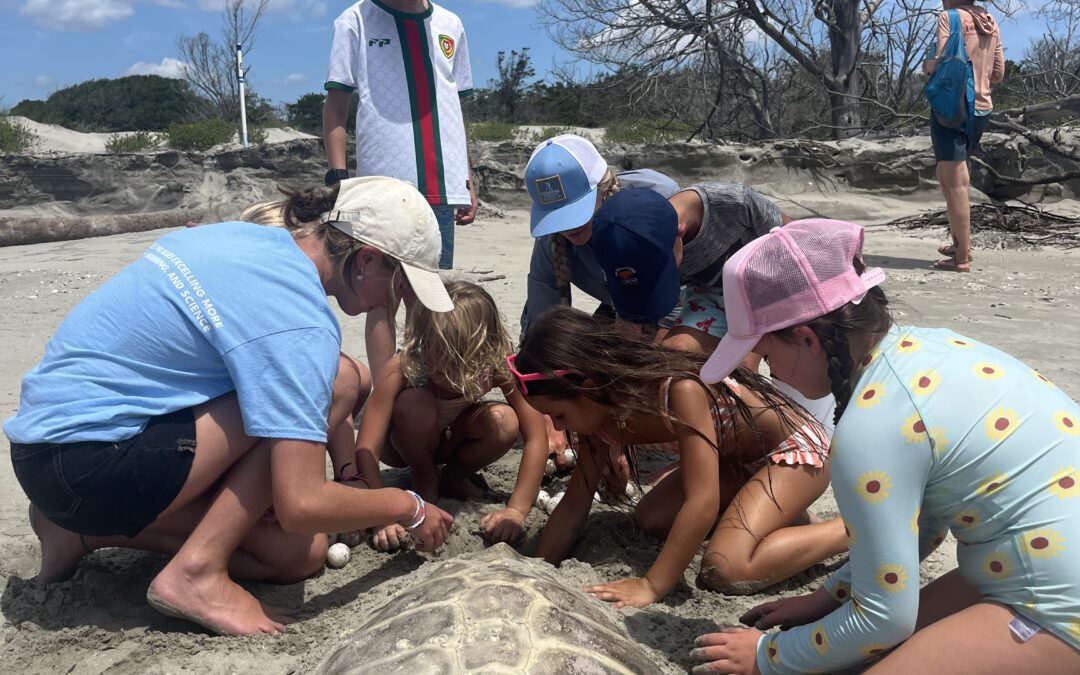
When the team arrives each morning, they are greeted by tracks leading out of the ocean. Made by female loggerheads, they lead to their nesting sites.
What is a false crawl?
In Abbie King’s nesting update, she mentioned that they have recorded over 1800 false crawls this season.
Not every sea turtle that comes ashore leaves behind a nest. Sometimes a female loggerhead emerges from the ocean, explores the beach, and then decides conditions aren’t right before returning to the water. These nesting attempts are called false crawls. Even though no eggs are laid, false crawls help biologists track turtle activity and better understand nesting behavior throughout the season.
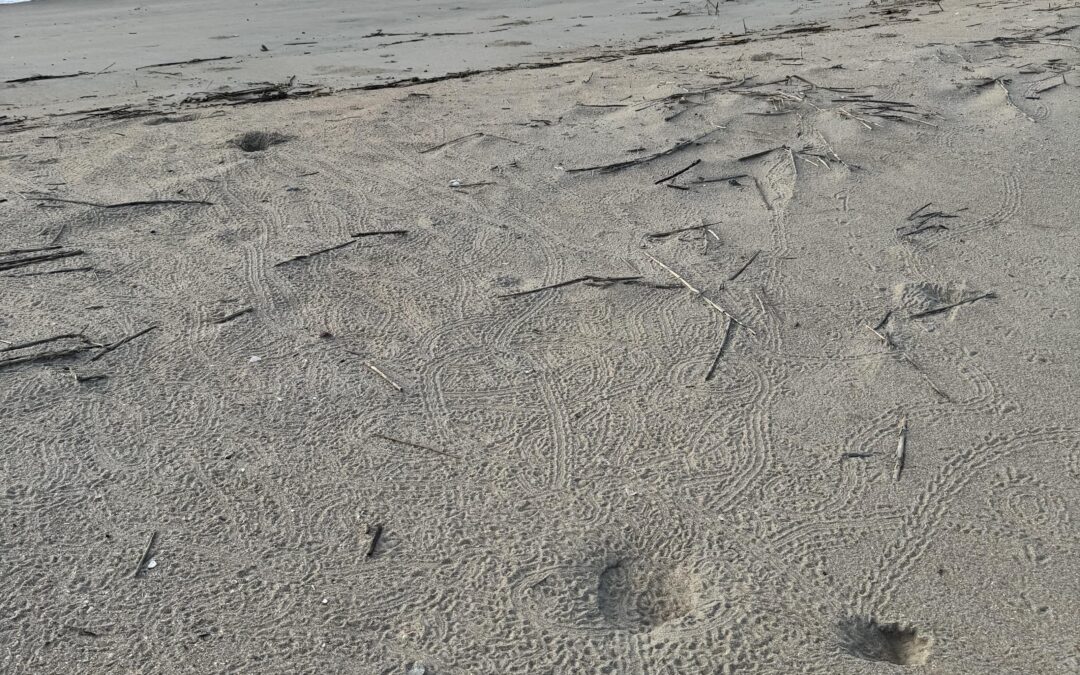
A turtle may just come up onto the beach and turn right around without nesting, while others may begin the nesting process by digging a partial nest before going back to the ocean. Coastal Expeditions Foundation intern Layla Petz documented a circular false crawl at Boneyard Beach on Bulls Island (see image).
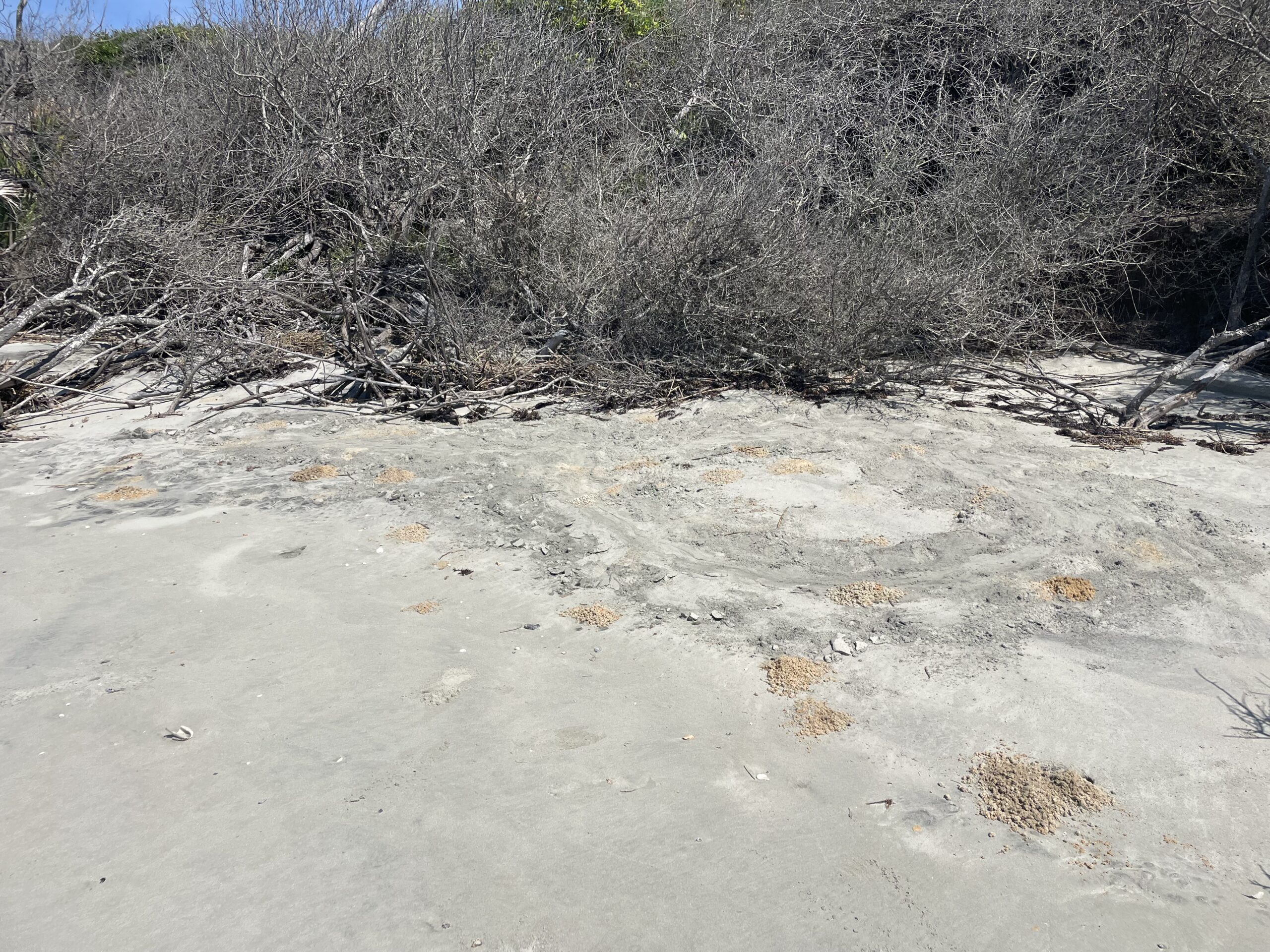
This turtle came ashore and made a circle without digging a nest.

Support the Work of the Sea Turtle Team
The Coastal Expeditions Foundation funds the work of the Cape Romain Sea Turtle Team every summer, raising over $45,000 to pay the seasonal salaries of wildlife biologists and summer interns to ensure that their work continues uninterrupted.
You can be a part of this local wildlife conservation project. Make a tax-deductible donation or adopt a nest and 100% of your contribution will directly benefit the people doing the work each day.